Understanding Legalisation Services
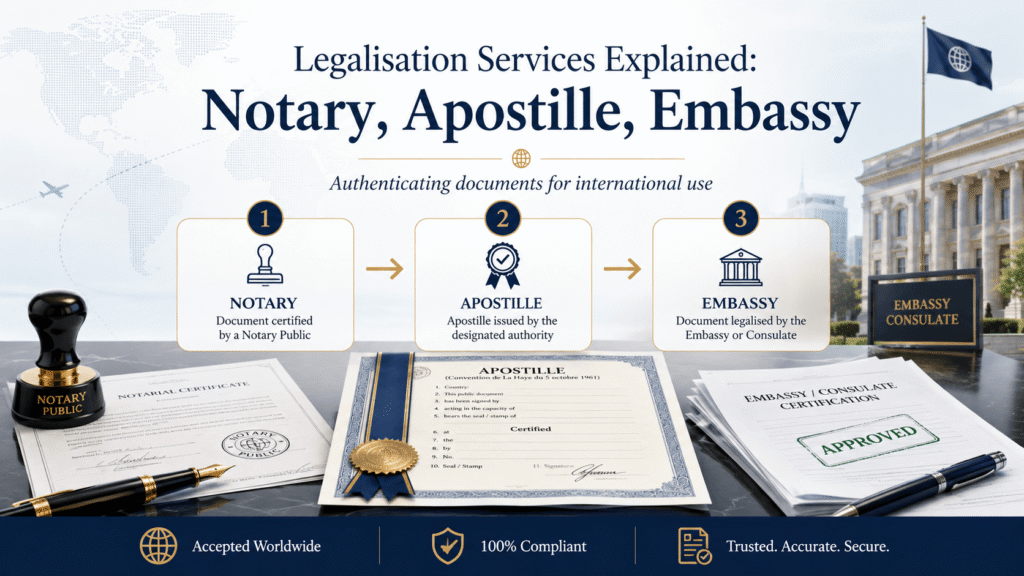
Legalisation services are essential for individuals and businesses needing to authenticate documents for use abroad. This process ensures that documents are recognized as valid in foreign jurisdictions. The primary methods of legalisation include obtaining a notary public’s signature, acquiring an apostille, or having documents certified by an embassy. Each method serves a specific purpose and is required in different scenarios.
What is an Apostille?
An apostille is a form of certification issued under the Hague Convention of 1961, which simplifies the process of legalising documents for international use. It verifies the authenticity of the signature, the capacity in which the person signing the document has acted, and, where appropriate, the identity of the seal or stamp which it bears.
When Do You Need an Apostille?
In the UK, you may need an apostille for various documents, including:
- Birth certificates
- Marriage certificates
- Academic transcripts
- Power of attorney documents
- Business documents
These documents often require an apostille when being presented to foreign authorities, such as for immigration, legal proceedings, or business transactions.
The Role of Notaries
A notary public is a qualified legal professional who can authenticate documents, administer oaths, and perform other legal formalities. Notaries play a crucial role in the legalisation process, especially when documents need to be notarised before obtaining an apostille.
How to Choose a Notary
When selecting a notary, consider the following:
- Experience and qualifications
- Specialization in the type of document you need to legalise
- Fees and turnaround times
It’s advisable to consult with a notary who has experience in handling documents for international use.
Embassy Certification
In some cases, documents may need to be certified by an embassy or consulate. This is particularly true for documents that do not fall under the Hague Convention or when dealing with countries that require additional verification.
When to Use Embassy Certification
Embassy certification is often required for:
- Documents for countries not part of the Hague Convention
- Legal documents for court proceedings abroad
- Employment contracts for expatriates
Costs and Turnaround Times
The costs associated with legalisation services can vary widely based on the type of document, the service provider, and the urgency of the request. Here’s a general breakdown:
Apostille Costs
The cost for obtaining an apostille in the UK typically ranges from £30 to £100 per document, depending on the service provider.
Notary Fees
Notary fees can vary significantly, often ranging from £50 to £200, depending on the complexity of the document and the notary’s experience.
Turnaround Times
Standard turnaround times for apostille services can range from 1 to 10 business days. However, expedited services may be available for urgent requests.
Practical Tips for Document Legalisation
To ensure a smooth legalisation process, consider the following tips:
- Check the specific requirements of the country where the document will be used.
- Ensure all documents are correctly prepared and signed before visiting a notary.
- Allow sufficient time for the legalisation process, especially if you are on a tight deadline.
FAQs
1. What is the difference between notarisation and apostille?
Notarisation is the process of having a document verified by a notary public, while an apostille is a certification that verifies the authenticity of the notarisation for international use.
2. How long does it take to get an apostille in the UK?
The process can take anywhere from 1 to 10 business days, depending on the service provider and whether you choose expedited services.
3. Do I need an apostille for all documents?
No, not all documents require an apostille. It depends on the requirements of the country where the document will be used.
4. Can I get an apostille for a document in a foreign language?
Yes, but you may need to have the document translated and certified before obtaining an apostille.
5. What documents cannot be apostilled?
Documents such as court orders, administrative documents, and certain government documents may not be eligible for an apostille.
Conclusion
Understanding the legalisation process, including the roles of notaries, apostilles, and embassies, is crucial for anyone needing to authenticate documents for international use. By following the guidelines outlined in this article, you can navigate the complexities of legalisation services with confidence.