Understanding Court Orders and Legal Notices
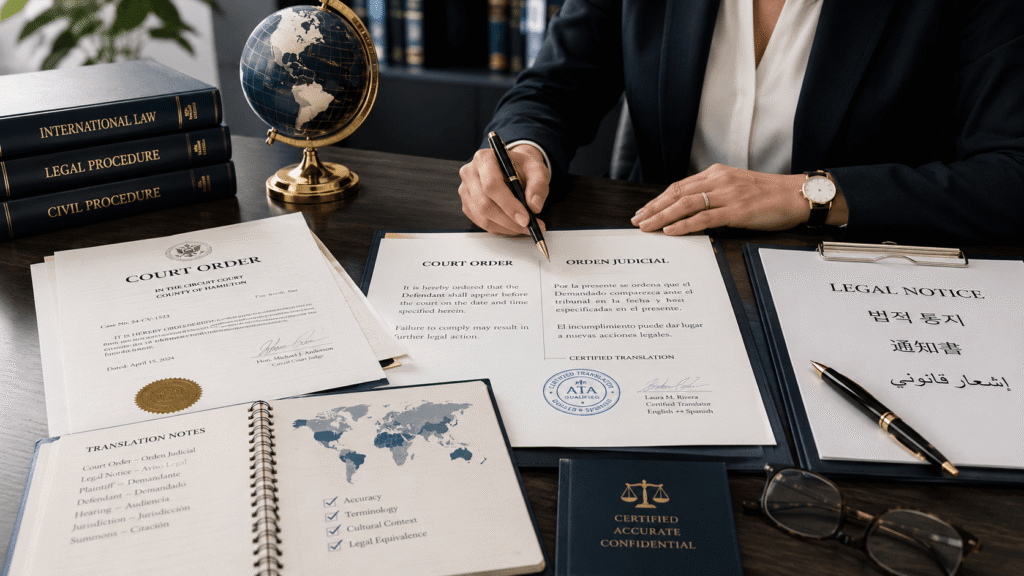
Court orders and legal notices are essential documents in the legal system, often requiring precise translation for various purposes, including immigration, legal proceedings, and personal matters. These documents can include anything from divorce decrees to custody orders, and their accurate translation is crucial for maintaining their legal validity.
Why Accurate Translation Matters
Translating court orders and legal notices is not merely about converting words from one language to another. It involves understanding legal terminology, cultural nuances, and the specific requirements of the jurisdiction involved. An inaccurate translation can lead to misunderstandings, legal complications, and even the rejection of documents by authorities.
Legal Implications
In many cases, translated documents must be certified to be accepted by courts or government agencies. This certification assures that the translation is accurate and complete, which is particularly important in legal contexts.
Cultural Considerations
Different legal systems have unique terminologies and practices. A translator must be familiar with both the source and target legal systems to ensure that the translation conveys the correct meaning.
Steps to Translate Court Orders and Legal Notices
1. Gather Necessary Documents
Before starting the translation process, collect all relevant documents. This may include the original court order or legal notice, any supplementary documents, and specific instructions from the requesting authority.
2. Choose a Qualified Translator
It is essential to select a translator who specializes in legal translations. Look for qualifications such as:
- Certification in translation
- Experience in legal translation
- Fluency in both source and target languages
3. Provide Context
When submitting documents for translation, provide context to the translator. Explain the purpose of the translation and any specific requirements, such as whether it needs to be certified for UKVI or other authorities.
4. Review and Revise
Once the translation is complete, review it for accuracy. If possible, have a legal professional or another translator check the work to ensure that it meets all necessary standards.
5. Certification and Notarization
If the translated document requires certification, ensure that the translator provides a signed statement confirming the accuracy of the translation. In some cases, notarization may also be necessary.
Certified Translation: What You Need to Know
Certified translations are often required for legal documents. A certified translation includes a declaration from the translator attesting to the accuracy and completeness of the translation. This is particularly important for documents submitted to UKVI or other governmental bodies.
Requirements for Certification
To be considered certified, a translation must:
- Be completed by a qualified translator
- Include a signed statement from the translator
- Be free from errors and omissions
The Role of Apostille and Notary Services
In some cases, translated documents may need to be legalized through an apostille or notarization. An apostille is a certificate that authenticates the origin of a public document, while notarization involves a notary public verifying the identity of the signer and the authenticity of the document.
When to Use Apostille or Notary Services
Consider using these services when:
- The document will be used in a foreign country
- The receiving authority requires it
- You want to ensure the document’s authenticity
Costs and Turnaround Times
The cost of translating court orders and legal notices can vary widely based on several factors, including:
- The complexity of the document
- The language pair
- The urgency of the request
Typical turnaround times can range from a few days to several weeks, depending on the translator’s workload and the document’s complexity. Always discuss timelines and costs upfront with your translator.
Finding a Translation Service in London
When looking for a translation service in London, consider the following:
- Check for reviews and testimonials
- Ask about their experience with legal translations
- Inquire about their certification process
Documents For Translation offers specialized services for translating court orders and legal notices, ensuring compliance with all legal requirements.
FAQs
1. What is a certified translation?
A certified translation is a translation that comes with a signed statement from the translator attesting to its accuracy and completeness.
2. Do I need a notary for my translated documents?
Notarization may be required if the translated document needs to be used in a legal context or submitted to a government agency.
3. How long does it take to translate a court order?
Turnaround times can vary but typically range from a few days to several weeks, depending on the document’s complexity and the translator’s workload.
4. What are the costs associated with translating legal documents?
Costs can vary based on the complexity of the document, the language pair, and the urgency of the request. It’s best to get a quote from the translation service.
5. Can I use a regular translator for legal documents?
It’s advisable to use a translator who specializes in legal translations to ensure accuracy and compliance with legal standards.
Conclusion
Translating court orders and legal notices is a critical process that requires expertise and attention to detail. By following the steps outlined above and choosing a qualified translator, you can ensure that your documents are accurately translated and legally valid.
For more information or to get started on your translation project, contact us today!