Understanding Romanisation
Romanisation is the process of converting text from a different writing system into the Latin alphabet. This is particularly important when translating names and addresses, as it ensures that they are accurately represented in a form that can be understood by speakers of languages that use the Latin script. The importance of correct romanisation cannot be overstated, especially in legal documents, travel itineraries, and official records.
Why Accurate Translation Matters
When translating names and addresses, accuracy is crucial for several reasons:
- Legal Compliance: Many official documents require precise translations for legal purposes, such as immigration applications or court documents.
- Identity Verification: Incorrect translations can lead to confusion or misidentification, which can have serious consequences.
- Cultural Sensitivity: Names often carry cultural significance. Mispronouncing or misspelling a name can be seen as disrespectful.
Key Considerations for Translating Names
1. Phonetic vs. Semantic Translation
There are two primary approaches to translating names:
- Phonetic Translation: This method focuses on how the name sounds rather than its meaning. For example, the name “Yuliya” might be romanised as “Yulia” to reflect its pronunciation.
- Semantic Translation: This approach translates the meaning of the name. For instance, the name “John” may be translated to its equivalent in another language, such as “Juan” in Spanish.
2. Understanding Local Naming Conventions
Different cultures have unique naming conventions that must be respected during translation. For example, in some cultures, the family name comes before the given name. Understanding these conventions is essential for accurate translation.
3. Handling Special Characters
Many names contain special characters or diacritics that may not exist in the Latin alphabet. It is important to determine how to represent these characters accurately. For example, the name “José” should be romanised as “Jose” to maintain its pronunciation while adapting to the Latin script.
Translating Addresses: Best Practices
1. Use Standardised Formats
When translating addresses, it is vital to use a standard format that is widely recognised. This includes the order of elements such as street name, house number, city, and postal code. For example:
123 Main St, London, SW1A 1AA, UK
2. Include Local Landmarks
In some cases, it may be helpful to include local landmarks or well-known locations to aid in navigation. For instance, “near the British Museum” can provide additional context.
3. Verify with Local Authorities
For official documents, it is advisable to verify the translated address with local authorities or postal services to ensure accuracy.
Certified Translation and Legal Requirements
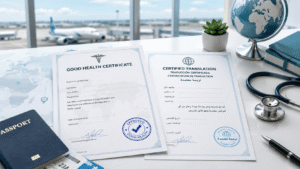
In many cases, especially for immigration or legal purposes, a certified translation is required. This means that the translation must be completed by a qualified translator who can attest to its accuracy. Here are some key points to consider:
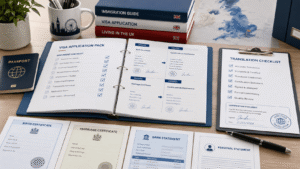
- UKVI Requirements: The UK Visas and Immigration (UKVI) has specific requirements for certified translations. Ensure that your translator is familiar with these guidelines.
- Apostille and Notary Services: Some documents may require an apostille or notarisation to be considered valid. Understanding these processes is essential for compliance.
- Prices and Turnaround Times: The cost of certified translation can vary based on the complexity of the document and the turnaround time required. It is advisable to obtain quotes from multiple providers.
Common Challenges in Translation
1. Ambiguity in Names
Some names may have multiple spellings or pronunciations, leading to ambiguity. It is essential to clarify the preferred spelling with the individual concerned.
2. Cultural Differences
Understanding cultural nuances is crucial. For example, the name “Muhammad” may be spelled in various ways, including “Mohammed” or “Mohammad.” Knowing the context can help in choosing the correct form.
3. Changes Over Time
Names and addresses can change due to marriage, divorce, or relocation. Always ensure that you have the most current information before proceeding with translation.
Conclusion
Translating names and addresses correctly is a vital skill that requires attention to detail and cultural understanding. By following the tips outlined in this article, you can ensure that your translations are accurate and respectful. For professional assistance, consider reaching out to certified translation services that specialise in this area.
FAQs
1. What is romanisation?
Romanisation is the process of converting text from a non-Latin script into the Latin alphabet.
2. Why is accurate name translation important?
Accurate name translation is crucial for legal compliance, identity verification, and cultural sensitivity.
3. What are the common challenges in translating names?
Common challenges include ambiguity in names, cultural differences, and changes over time.
4. Do I need a certified translation for immigration documents?
Yes, many immigration documents require certified translations to be accepted by authorities.
5. How can I ensure my address is translated correctly?
Use standardised formats, include local landmarks, and verify with local authorities for accuracy.